
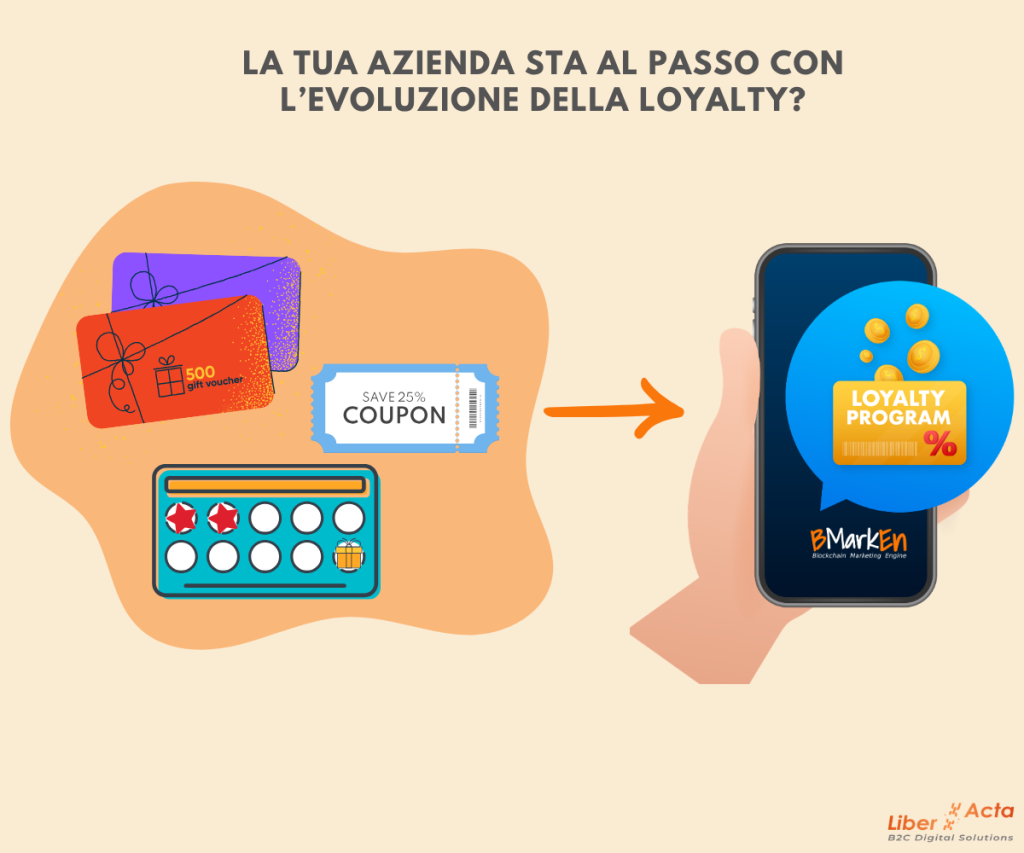
Have you ever wondered how we transitioned from a paper card in a wallet to a digital ecosystem capable of anticipating customer desires?
Today, loyalty programs are no longer just a simple points collection, but true business strategies based on experience and emotional connection. Taking a step back into the history of customer retention helps us understand one fundamental thing: those who do not innovate are left behind. Let’s see how loyalty marketing has evolved and why companies can no longer afford to ignore digitalization.
The Analog Era of Stamps and Loyalty Cards
It all began roughly a century ago. The first paper loyalty cards relied on simple mechanisms: stamps, stickers, and points to collect in order to obtain discounts or physical rewards. This model dominated the food sector, transportation, and large-scale retail (GDO) for decades.
However, the real turning point toward modern loyalty marketing arrived in the 1980s. In a newly deregulated and highly competitive airline market, American Airlines intuited the potential of data and launched the first structured loyalty program, introducing the concept of “frequent flyer miles.” It was the beginning of a new era: the focus shifted from short-term promotions to long-term relationships with customers.
The Digital Revolution: The Era of Data and Emotional Engagement
With the advent of digitalization, the way we build customer loyalty has changed forever. Smartphones, dedicated apps, and e-commerce have transformed loyalty into a seamless, dynamic, and multichannel process.
Thanks to technology, this transformation has brought concrete benefits on three fronts:
- Sustainability and Efficiency: Goodbye to lost papers and printing costs. Today, digital loyalty lives inside the consumer’s smartphone, wiping out operational costs and improving the user experience.
- From Transaction to Relationship: Old programs were purely transactional (you buy = you get a point). Today, thanks to behavioral data analysis, the focus is on hyper-personalization. Offers respond in real time to the specific needs of the consumer.
- Brand Trust: A customer who receives tailored promotions feels understood and valued. This generates a strong emotional engagement, which is the only true driver of long-term loyalty.
Tradition vs. Innovation: Does Analog Loyalty Still Make Sense?
Traditional loyalty programs represent an important chapter in marketing history and still retain a very small market niche—for instance, in local historical contexts or for specific commercial targets resistant to technology.
However, these are exceptions. In today’s market, basing your loyalty strategy on physical supports means giving up an invaluable asset: data. Without traceability and omnichannel integration, it is impossible to compete.
And Which Side Is Your Company On?
The market moves fast, and consumers expect integrated, rewarding, and personalized digital experiences. Continuing to postpone innovation means leaving room for your competitors.
Do you want to discover how to transform your loyalty program into a strategic asset for your business?
Explore our loyalty marketing solution on the Liberacta website or write to us directly at info@liberacta.com to design your next successful strategy together.